
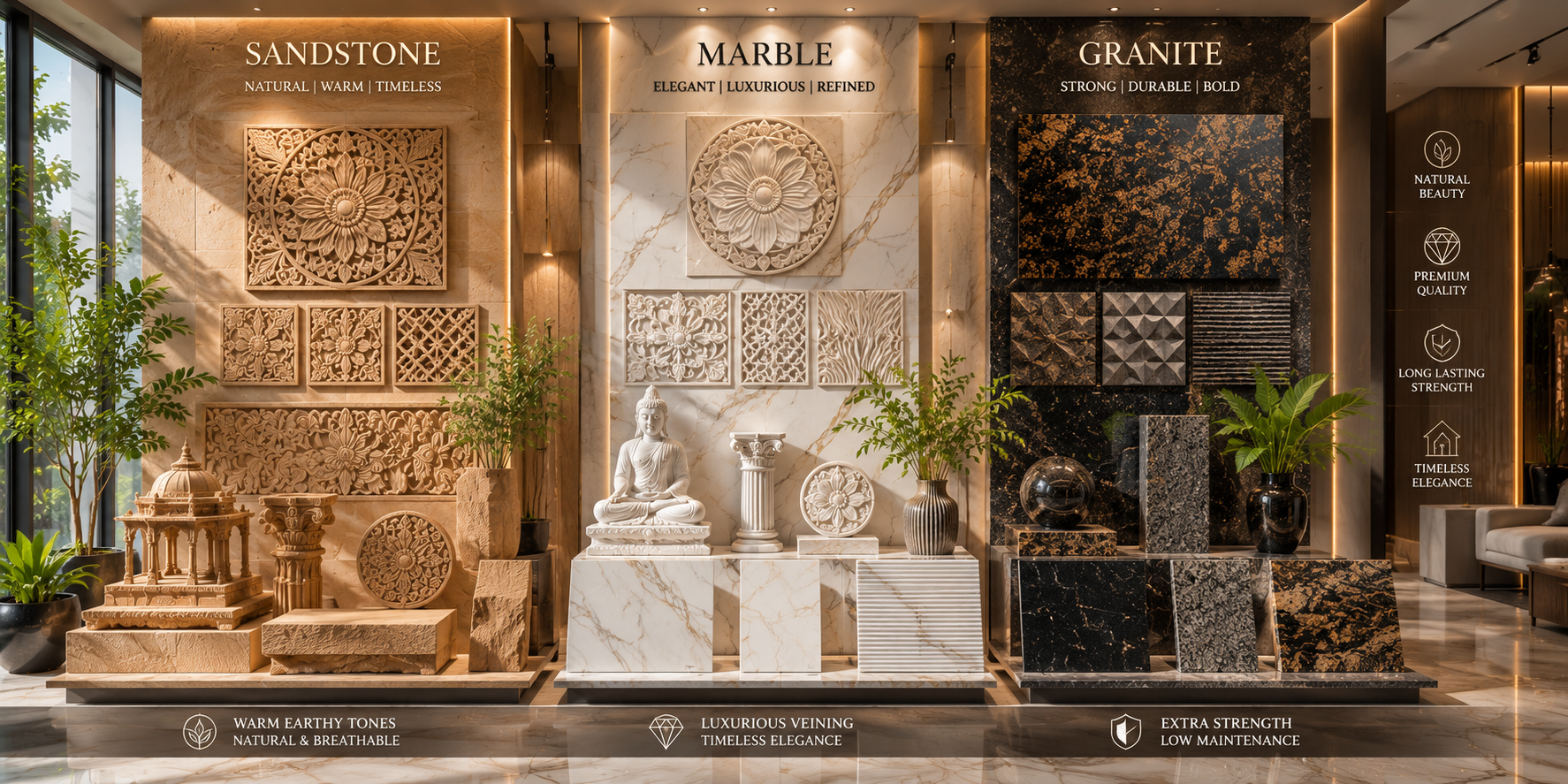
Natural stone has been used in architecture and interior design for centuries because of its durability, elegance, and timeless appeal. Among the many options available, sandstone, marble, and granite remain the three most popular choices for residential and commercial projects.
Whether you’re designing a luxurious home, a commercial building, a garden landscape, or a temple, choosing the right natural stone can significantly impact the appearance, longevity, and maintenance of your space.
This guide compares sandstone, marble, and granite to help you make an informed decision based on your project requirements.
Which Natural Stone Is Best?
There is no single “best” natural stone. The right choice depends on where and how you plan to use it.
- Sandstone is ideal for warm, natural aesthetics and versatile indoor or outdoor applications.
- Marble is best for luxurious interiors that require elegance and sophistication.
- Granite is the preferred choice for projects demanding exceptional strength, durability, and weather resistance.
Understanding the unique characteristics of each stone will help you select the perfect material for your project.
Understanding the Three Natural Stones
Sandstone
Sandstone is a sedimentary rock formed over millions of years from compacted sand particles. Known for its earthy colours and natural textures, sandstone is one of the most versatile building materials available.
Common applications include:
- Wall cladding
- Garden landscaping
- Outdoor paving
- Temples
- Stone jali
- CNC wall panels
- Sculptures
- Building façades
Its natural appearance makes sandstone suitable for both traditional and contemporary architecture.
Marble
Marble is a metamorphic natural stone admired for its luxurious appearance, smooth finish, and elegant natural veining. Every marble slab is unique, making each installation one of a kind.
Marble is commonly used for:
- Flooring
- Feature walls
- Staircases
- Temples
- Sculptures
- Tabletops
- Luxury interiors
Its timeless beauty continues to make marble one of the most preferred materials among architects and interior designers.
Granite
Granite is an igneous rock known for its exceptional hardness, durability, and weather resistance. It performs remarkably well in demanding environments while requiring minimal maintenance.
Popular applications include:
- Exterior wall cladding
- Outdoor flooring
- Garden landscaping
- Staircases
- Commercial buildings
- Boundary walls
- Monuments
Granite combines long-lasting strength with natural beauty, making it an excellent long-term investment.
Sandstone vs Marble vs Granite Comparison
| Feature | Sandstone | Marble | Granite |
|---|---|---|---|
| Appearance | Natural, earthy texture | Luxurious with elegant veining | Bold and uniform grain |
| Durability | High | High | Very High |
| Indoor Use | Excellent | Excellent | Excellent |
| Outdoor Use | Excellent | Limited | Excellent |
| Maintenance | Low | Moderate | Low |
| Weather Resistance | High | Moderate | Very High |
| Finish Options | Natural, Honed, Textured | Polished, Honed | Polished, Flamed, Leathered |
| Best For | Wall Cladding, Landscaping, Temples | Luxury Interiors | Outdoor & Heavy-Use Areas |
1. Appearance and Aesthetic Appeal
Sandstone
Sandstone offers warm, earthy tones that blend naturally with landscapes and architectural designs. Its textured surface creates a rustic yet elegant appearance, making it ideal for projects that embrace natural beauty.
Ideal for:
- Modern villas
- Farmhouses
- Outdoor spaces
- Traditional architecture
Marble
Marble is synonymous with luxury. Its distinctive natural veining and polished finish create sophisticated interiors that never go out of style.
Ideal for:
- Luxury homes
- Hotels
- Living rooms
- Designer interiors
Granite
Granite features bold natural patterns and a refined appearance that complements both modern and commercial architecture. Its durable surface maintains its beauty even under harsh conditions.
Ideal for:
- Commercial buildings
- Modern architecture
- Outdoor installations
2. Durability
If durability is your highest priority, granite stands out as the strongest option.
Granite
Granite offers outstanding performance with:
- Exceptional hardness
- Scratch resistance
- Heat resistance
- Excellent weather resistance
- Extremely long lifespan
Sandstone
Sandstone provides:
- Reliable structural strength
- Excellent outdoor performance
- Durability for a wide range of architectural applications
Marble
Marble is durable for interior use but requires slightly more care than granite to preserve its polished surface and natural elegance.
3. Maintenance Requirements
Maintenance is an important consideration when selecting natural stone.
Sandstone
Sandstone requires occasional cleaning and periodic sealing, particularly for outdoor installations, to preserve its natural appearance.
Marble
Marble benefits from regular sealing and gentle cleaning using stone-safe products to maintain its shine and prevent staining.
Granite
Granite requires minimal maintenance due to its natural resistance to scratches, stains, moisture, and weather conditions.
4. Indoor vs Outdoor Applications
Best Indoor Stone
Marble is widely regarded as the preferred choice for luxurious indoor spaces because of its premium finish and elegant appearance.
Suitable for:
- Living rooms
- Bedrooms
- Staircases
- Temples
- Decorative feature walls
Best Outdoor Stone
Granite performs exceptionally well outdoors due to its superior resistance to rain, sunlight, moisture, and temperature fluctuations.
Perfect for:
- Exterior elevations
- Garden pathways
- Boundary walls
- Public spaces
Most Versatile Stone
Sandstone offers remarkable flexibility and performs exceptionally well in both indoor and outdoor environments.
Ideal for:
- Wall cladding
- Garden décor
- Sculptures
- CNC wall panels
- Water features
- Landscape architecture
5. Cost Considerations
The overall cost of natural stone depends on factors such as the stone variety, finish, thickness, dimensions, and level of craftsmanship.
Generally:
- Sandstone offers excellent value for large architectural and landscaping projects.
- Marble is chosen for premium aesthetics and luxurious interiors.
- Granite is considered a long-term investment because of its unmatched durability.
Rather than focusing solely on the initial price, consider the stone’s lifespan, maintenance requirements, and intended application before making a decision.
Which Stone Should You Choose?
Choose Sandstone If You Want:
- Warm, natural aesthetics
- Architectural versatility
- Beautiful outdoor landscapes
- Decorative wall cladding
- CNC wall panels and sculptures
Choose Marble If You Want:
- Elegant luxury interiors
- Premium decorative features
- Sophisticated flooring
- High-end temples and sculptures
Choose Granite If You Want:
- Maximum durability
- Superior weather resistance
- Exterior façades
- Commercial applications
- Low-maintenance surfaces
Why Choose Natural Stone?
Natural stone offers several advantages that manufactured materials often cannot match.
Benefits include:
- Timeless beauty
- Exceptional durability
- Unique natural patterns
- Sustainable building material
- Increased property value
- Suitable for both traditional and modern architecture
- Low long-term maintenance
- Lasts for generations
Natural stone remains one of the most reliable and visually appealing choices for both residential and commercial construction projects.
Final Thoughts
Sandstone, marble, and granite each offer unique advantages, making them suitable for different architectural and design applications. Sandstone provides warmth and versatility, marble delivers elegance and sophistication, while granite offers unmatched strength and long-term durability.
Choosing the right natural stone depends on your project’s purpose, design style, installation location, and maintenance expectations. By understanding the characteristics of each material, you can confidently select a stone that enhances both the beauty and longevity of your space.
Whether you’re building a luxury residence, designing a commercial project, or creating a timeless landscape, investing in high-quality natural stone ensures lasting value, exceptional performance, and enduring elegance.
Frequently Asked Questions (FAQs)
Which is better: Sandstone, Marble, or Granite?
Each natural stone serves a different purpose. Sandstone is highly versatile for indoor and outdoor applications, marble is best suited for luxurious interiors, and granite is the ideal choice for projects requiring exceptional strength and durability.
Which stone is best for outdoor use?
Granite is generally the best option for outdoor installations because of its superior weather resistance and durability. Sandstone is also an excellent choice for landscaping, garden features, wall cladding, and architectural applications.
Which natural stone requires the least maintenance?
Granite requires the least maintenance thanks to its hardness and natural resistance to scratches, stains, moisture, and weather conditions.
Is sandstone suitable for modern homes?
Yes. Sandstone complements both traditional and contemporary architecture with its natural textures, earthy colours, and timeless appearance.
Which natural stone lasts the longest?
All three natural stones are highly durable when properly maintained. However, granite is generally considered the longest-lasting because of its exceptional hardness, weather resistance, and long service life.